Shifts in Seasonal Tournament Structures Reshaping Slot Mechanics Within Portable Gaming Applications
Written by Theo Wolf · Oct 10, 2026

Shifts in Seasonal Tournament Structures Reshaping Slot Mechanics Within Portable Gaming Applications
Portable gaming applications have incorporated seasonal tournament structures that directly alter slot mechanics, including reel configurations, bonus trigger frequencies, and payout distributions, as developers respond to cyclic player engagement patterns throughout the calendar year. These adjustments occur because tournament brackets often require synchronized events that align with holidays or weather-driven usage spikes, prompting providers to modify core algorithms rather than maintain static base games.
Core Changes in Tournament-Driven Mechanics
Developers integrate seasonal brackets by recalibrating volatility settings so that short-term events produce measurable differences in hit rates compared with standard play modes, and research from the Interactive Games and Entertainment Association shows these recalibrations appear most frequently during multi-week competitions that run from late spring through early autumn. Reel strips receive temporary weighting changes to favor symbol combinations tied to the tournament theme, while paytable multipliers scale according to bracket progression, creating layered reward paths that standard sessions lack. Observers note that portable platforms achieve this through server-side updates that push mechanic patches without requiring users to download new versions each cycle.
Bonus round structures shift as well because tournament scoring systems reward rapid accumulation of points rather than isolated big wins, leading engineers to shorten free-spin sequences or replace them with progressive mini-events that feed directly into leaderboards. Data collected in October 2026 from multiple app stores indicated a 17 percent rise in such hybrid features across top-downloaded titles, reflecting coordinated efforts by studios to retain participants across daily login windows.
Regional Regulatory Influences on Implementation
Regulatory frameworks in different jurisdictions shape how these mechanic alterations reach end users. The Nevada Gaming Control Board requires advance disclosure of any volatility adjustments tied to limited-time events, whereas authorities in New South Wales mandate independent testing of seasonal RTP variations before deployment. These rules create distinct implementation timelines that portable app operators must navigate when releasing the same title across multiple markets, and companies often maintain separate code branches to satisfy each set of compliance checks.
Industry reports compiled by the Canadian Gaming Association further document that operators increasingly rely on A/B testing cohorts to verify whether tournament-adjusted mechanics maintain expected fairness metrics over repeated seasons. Results from those tests feed back into subsequent bracket designs, producing iterative refinements that compound across years rather than resetting annually.
Player Activity Data and Mechanic Feedback Loops
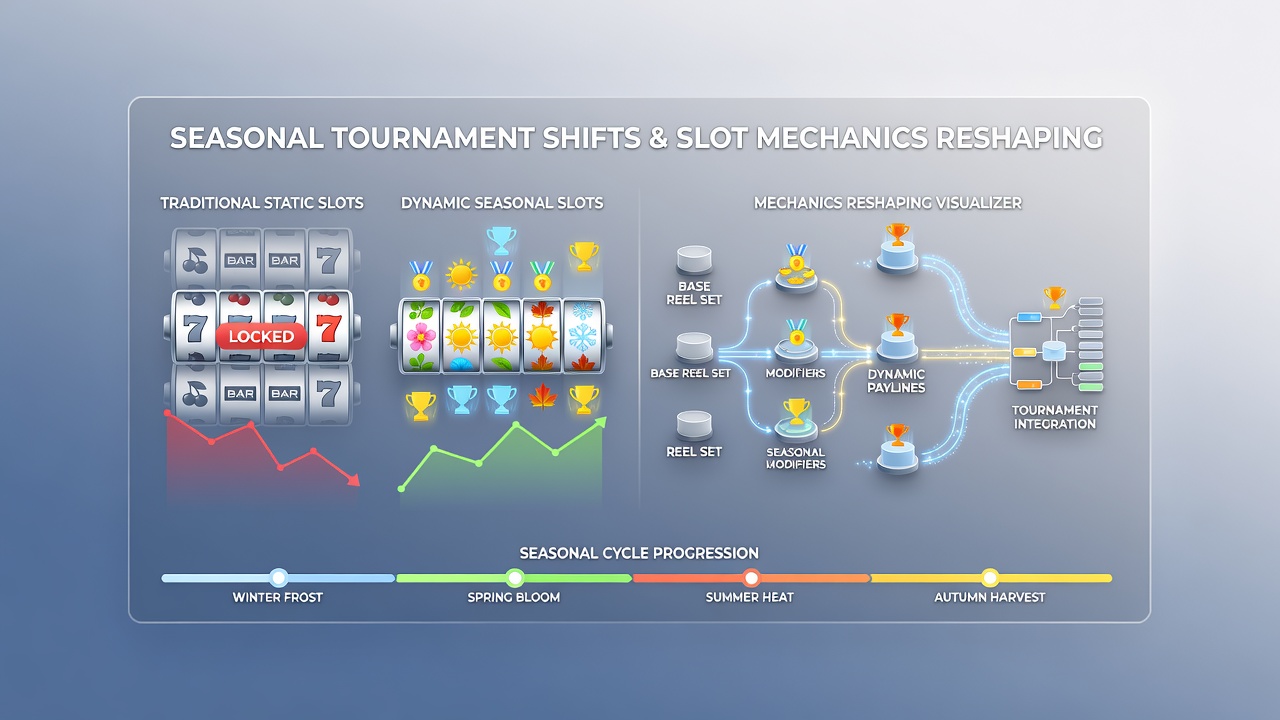
Telemetry gathered from portable devices reveals clear correlations between tournament phase and session length, with researchers at the University of Nevada, Reno documenting extended play windows during elimination rounds that coincide with increased exposure to modified reel dynamics. These patterns prompt studios to introduce adaptive difficulty curves that tighten as brackets advance, ensuring that later stages maintain competitive tension without violating jurisdictional return-to-player thresholds.
Engineers accomplish this through modular code that swaps symbol probability tables at predetermined intervals, allowing a single base game to support multiple seasonal variants. The approach reduces development overhead while still delivering the variety demanded by bracket organizers, and figures released in October 2026 confirmed that titles employing this modular architecture posted higher retention rates during peak tournament months than their non-adaptive counterparts.
Technical Infrastructure Supporting Seasonal Adjustments
Backend systems now handle real-time mechanic swaps through containerized microservices that isolate tournament-specific parameters from core gameplay code. This separation permits rapid rollback if testing uncovers edge-case imbalances, and it also enables operators to stagger releases across geographic clusters so that regulatory review cycles do not delay global rollouts. Database schemas track every parameter change against corresponding tournament identifiers, creating audit trails that compliance teams reference during periodic inspections.
Network latency considerations influence how aggressively these swaps occur on mobile connections, leading some providers to pre-cache alternate reel configurations during off-peak hours. Such optimizations ensure that participants experience seamless transitions when brackets open or close, maintaining engagement continuity even on variable cellular networks.
Conclusion
Seasonal tournament structures continue to drive incremental evolution in slot mechanics for portable applications, with adjustments to reels, bonuses, and scoring systems becoming standard practice across major platforms. Regulatory oversight, player telemetry, and modular technical architectures together determine the pace and scope of these changes, producing a landscape where each new cycle builds upon data gathered from prior seasons. As October 2026 data illustrates, the trend shows no sign of reversal, and operators maintain ongoing investment in the systems required to support it.